NEWYou can now listen to Fox News articles!
The Trump administration will not comply with a court order requiring due process for hundreds of Venezuelan migrants deported to a maximum-security prison in El Salvador last year, DOJ lawyers said. It sets up a heated clash in court next week in a case that is almost certainly headed back to the Supreme Court.
The status and plight of 252 Venezuelan migrants deported to a Salvadoran prison last March under the 1798 Alien Enemies Act have emerged as one of the defining court fights of Trump’s second term, allowing the administration to test its mettle against the federal courts and the practical limits of judicial authority, on one of Trump’s biggest policy priorities.
It’s a fight that has also put U.S. District Judge James Boasberg, who is overseeing the Alien Enemies Act case, squarely in the Trump administration’s crosshairs as he attempts to determine what due process protections, if any, the administration is legally obligated to provide and how far the courts can go to enforce them.
A new filing from the Justice Department made clear the administration believes it owes the migrants no additional due process at all. Should the court try to order otherwise, lawyers for the administration said they would promptly seek intervention from higher courts.
SUPREME COURT FREEZES ORDER TO RETURN MAN FROM EL SALVADOR PRISON

Department of Homeland Security Secretary Kristi Noem speaks during a tour of the Terrorist Confinement Center. (Alex Brandon-Pool/Getty Images)
In its filing Monday, the Justice Department argued again that the administration is powerless to return the Venezuelan migrants who were summarily deported last year. The department rejected the notion that the U.S. could “facilitate” due process proceedings for the migrants in question as previously ordered by the court, describing the options to do so as either legally impossible or practically unworkable due to national security concerns and the fragile political situation in Venezuela after the U.S. capture of Venezuelan strongman Nicolás Maduro during a raid in Caracas last month.
The DOJ also reiterated its argument that bringing petitioners back to the U.S. would harm “critical” foreign policy negotiations with Venezuela and carry “profound” national security risks, citing the alleged gang member status of the migrants in question. (The alleged gang member status of many of the individuals has been called into question.)
DOJ lawyers also rejected the notion of conducting the proceedings overseas, including at the U.S. embassy in Venezuela, citing the U.S. capture and arrest of Maduro and his wife.
The U.S., they said, lacks custody to conduct the habeas proceedings on foreign soil and doing so would risk “injecting an extremely complicated issue into what is already a delicate situation” in Venezuela, potentially “negatively affecting U.S. efforts toward stabilization and transition that aim to benefit tens of millions of Venezuelans.”
The deportations, carried out under the Alien Enemies Act despite an emergency court order from Judge Boasberg, prompted an eleven-month legal battle that reached the Supreme Court in April and months of fights in the lower courts, including a subsequent order from Boasberg in December for the government to “facilitate” due process for the deported migrants.
DEFIANT MADURO DECLARES HE IS A ‘PRISONER OF WAR’ IN FIRST US COURT APPEARANCE
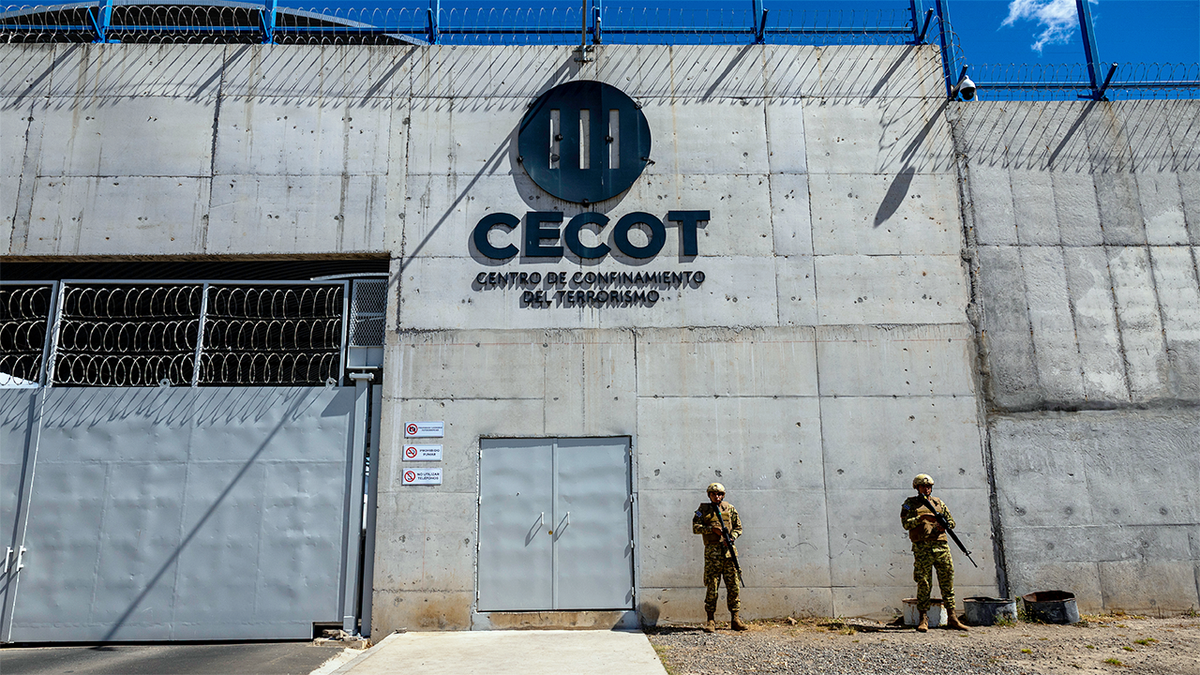
Salvadorian troops guard the exterior of CECOT Dec. 15, 2025, in Tecoluca, El Salvador. (John Moore/Getty Images)
The Supreme Court said then that individuals removed under the Alien Enemies Act must have the ability to contest their removal and have a meaningful opportunity and notice to do so before they are removed.
Boasberg has spent the months since attempting to determine the status of the hundreds of CECOT plaintiffs and what ability the U.S. has to facilitate their return or to provide the class of migrants with due process and habeas protections, including the ability to challenge their alleged gang status.
His December order required the Trump administration to submit to the court in writing its plans to provide due process to the class of migrants deported to El Salvador. Boasberg said the administration could do this by either returning the migrants to the U.S. to have their cases heard in person or facilitate hearings abroad with members of the class that “satisfy the requirements of due process.”
APPEALS COURT BLOCKS TRUMP ADMIN’S DEPORTATION FLIGHTS IN ALIEN ENEMIES ACT IMMIGRATION SUIT
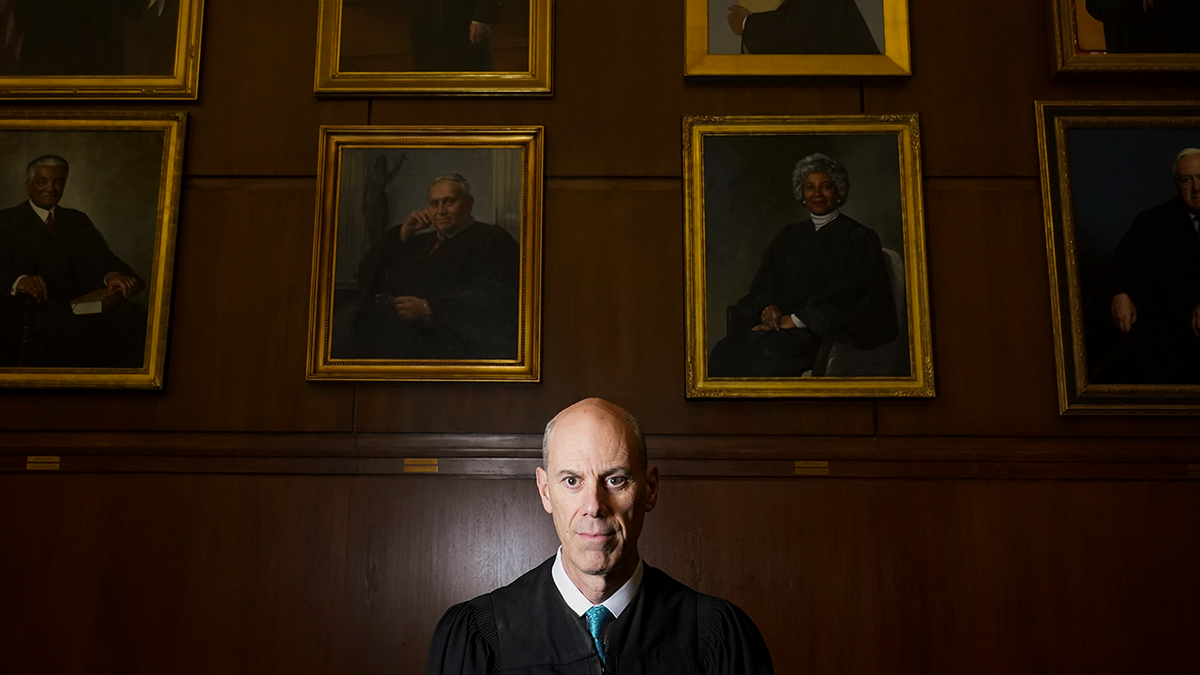
Judge James E. Boasberg, chief judge of the Federal District Court in Washington, D.C. (Washington Post via Getty Images)
Lawyers for the Justice Department previewed similar arguments last month before an “en banc” 17-judge panel of the U.S. Court of Appeals for the Fifth Circuit, which convened to weigh the legality of the Trump administration’s use of the 227-year-old law.
The Justice Department told judges then that the U.S. indictment against Maduro “reinforces the Proclamation’s findings that the Maduro regime and TdA have formed a ‘hybrid criminal state’ directed by the regime” and justified the decision to use the Alien Enemies Act law to quickly deport them to the third-country prison.
“These new developments underscore the Maduro Regime’s control over TdA and TdA’s violent invasion or predatory incursion on American soil. As a result, it is even clearer that the President’s invocation of the Alien Enemies Act was part of a high-level national security mission that exists outside the realm of judicial interference.”
ACLU lawyer Lee Gelernt told the judges during the same hearing that the Alien Enemies Act does not give the administration “a blank check” for a president to “use his war powers any time he considers it valuable.”
CLICK HERE TO GET THE FOX NEWS APP
Regardless of how Boasberg rules, the new filing made clear that the Trump administration views the fight as far from over.
“If, over defendants’ vehement legal and practical objections, the Court issues an injunction, defendants intend to immediately appeal, and will seek a stay pending appeal from this Court (and, if necessary, from the D.C. Circuit),” the Justice Department said.