NEWYou can now listen to Fox News articles!
Congress is moving to limit the Pentagon’s ability to pull forces out of Europe and South Korea, easing concerns among allied governments.
The 2026 National Defense Authorization Act, finalized by House and Senate negotiators and released Sunday evening, keeps force presence at roughly its current levels in both regions. It states that the U.S. cannot reduce its forces in Europe below 76,000 without submitting an assessment and certifying to Congress that such a move would not harm U.S. or NATO security interests.
The bill places restraints on reductions below 28,500 in South Korea. Any drawdown would require the Pentagon to assure Congress that deterrence against North Korea would not be weakened, confirm that allies were consulted, and provide both a national security justification and an assessment of regional impact.
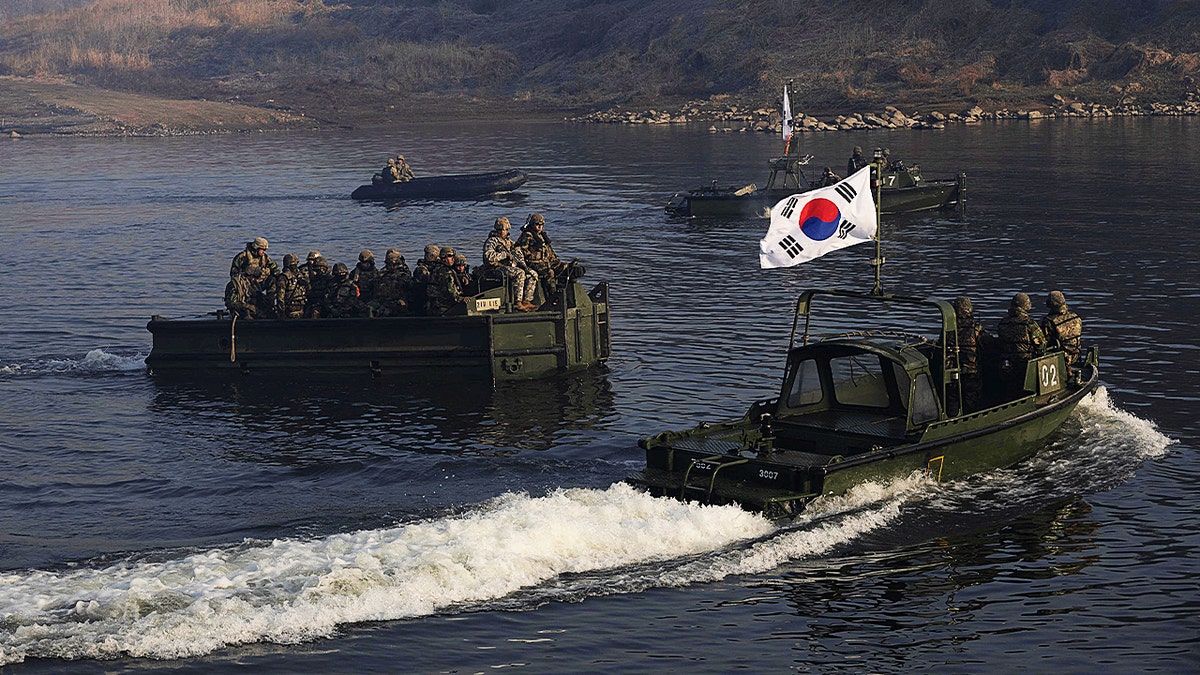
The bill places restraints on reductions below 28,500 in South Korea. ( JEON HEON-KYUN/Pool via Reuters)
The legislation also requires the U.S. to retain the position of Supreme Allied Commander Europe (SACEUR), NATO’s top military post, codifying into statute a role traditionally held by an American general.
These limits follow reports that the Pentagon had considered reducing forces in Europe and South Korea and even relinquishing the SACEUR position. Whether those ideas reflected genuine planning or were intended as pressure on allies to invest more in their own defenses, U.S. leaders have recently signaled they are stepping back from such moves even without congressional restrictions.
During a meeting last week with U.S. national security officials and European leaders, American officials told their counterparts that Europe must be prepared to bear the brunt of NATO’s defense responsibilities by 2027, three European officials familiar with the meeting told Fox News Digital.
The U.S. plans to hold onto the SACEUR position but will offer some other senior NATO military posts to European nations, officials said. They also noted that Washington has no near-term plans for major troop reductions in Europe.
“We’ve been very clear in the need for Europeans to lead in the conventional defense of Europe. We are committed to working through NATO coordination mechanisms to strengthen the alliance and ensure its long-term viability as European allies increasing take on responsibility for conventional deterrence and defense in Europe,” Pentagon press secretary Kingsley Wilson said in response.
GERMANY UNVEILS NEW INCENTIVES TO BOOST MILITARY RECRUITMENT AMID GROWING RUSSIA THREAT

It states that the U.S. cannot reduce its forces in Europe below 76,000 without submitting an assessment and certifying to Congress that such a move would not harm U.S. or NATO security interests. (Xavier Piron/Photonews via Getty Images)
Earlier this year, the Army pulled a rotating brigade stationed largely in Romania back to the United States, prompting European allies to question whether that move might signal the beginning of broader U.S. force drawdowns on NATO’s eastern flank.
The NDAA — the yearly must-pass package outlining the Pentagon’s spending and policy priorities — is expected to move swiftly to a House vote this week. Congress aims to have the legislation on the president’s desk before Christmas.
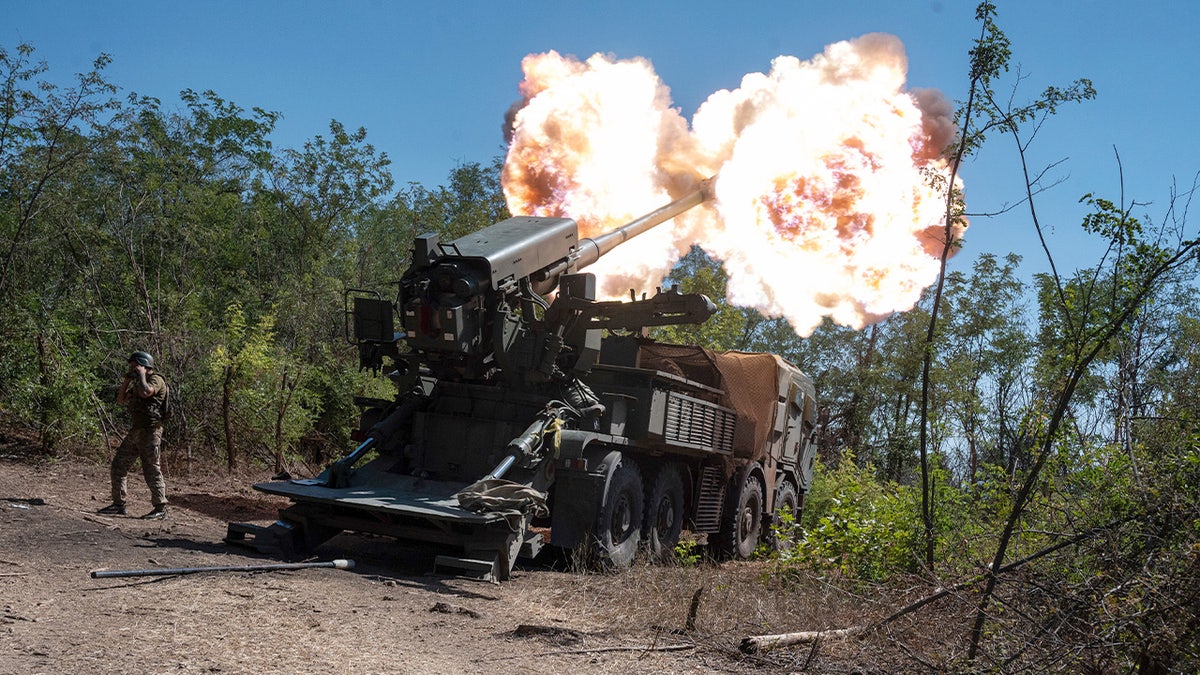
The bill authorizes $400 million for Ukranian security next year. ((AP Photo/Danylo Antoniuk))
The bill also includes $400 million for the Ukraine Security Assistance Initiative over two years and an amendment specifying when the Pentagon may reclaim equipment purchased for Ukraine but not yet delivered: only when the equipment is urgently needed for an ongoing or imminent U.S. contingency operation and failing to use it would risk loss of life or critical mission failure.
This provision follows the Pentagon’s decision earlier this year to pause delivery of certain U.S.-funded military equipment to Ukraine.
CLICK HERE TO DOWNLOAD THE FOX NEWS APP
Over the weekend, War Secretary Pete Hegseth described South Korea and several European nations as “model allies.”
“Model allies that step up, like Israel, South Korea, Poland, increasingly Germany, the Baltics and others, will receive our special favor,” he said at the Reagan National Defense Forum. “Allies that still fail to do their part for collective defense will face consequences.”