NEWYou can now listen to Fox News articles!
The Supreme Court on Friday agreed to review the legality of President Donald Trump’s executive order to end birthright citizenship in the U.S., a landmark case that stands to profoundly upend the lives of millions of Americans and lawful U.S. residents.
Oral arguments in the case are expected to be held sometime between February and April next year, with a ruling expected by the end of June.
At issue before the court is Trump’s executive order signed on the first day of his second presidential term, which seeks to end birthright citizenship for nearly all persons born in the U.S. to undocumented parents, or parents with lawful temporary status in the country.
Trump’s order seeks to clarify the 14th Amendment, which states, “All persons born or naturalized in the United States, and subject to the jurisdiction thereof, are citizens of the United States and of the State wherein they reside.”
Trump administration officials have focused their case on the “subject to the jurisdiction thereof” provision of the 14th Amendment, Solicitor General D. John Sauer argued in appealing the case to Supreme Court that the clause, in their view, had been misinterpreted.
“The lower court’s decisions invalidated a policy of prime importance to the president and his administration in a manner that undermines our border security,” Sauer wrote. “Those decisions confer, without lawful justification, the privilege of American citizenship on hundreds of thousands of unqualified people.”
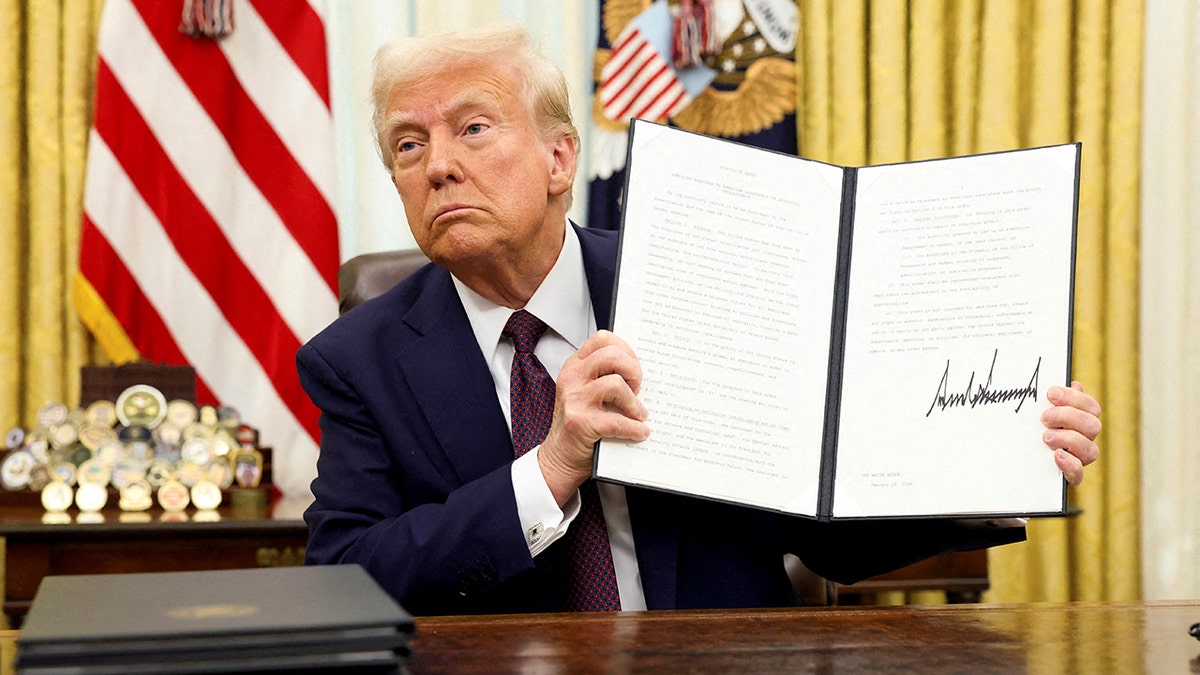
President Donald Trump holds a signed executive order on AI, in the Oval Office of the White House, in Washington, Jan. 23, 2025. (REUTERS/Kevin Lamarque)
More than 22 U.S. states and immigrants’ rights groups have sued the Trump administration to block the change to birthright citizenship, arguing in court filings that the executive order is both unconstitutional and “unprecedented.”
CLICK HERE TO GET THE FOX NEWS APP
And to date, no court has sided with the Trump administration’s executive order seeking to ban birthright citizenship, though multiple district courts have blocked it, including in the wake of the Supreme Court ruling on a similar matter.
This is a breaking news story. Check back for updates.